Monday, September 9, 2019

Kentucky Educator A. D. Albright


A. D. Albright
1913-2009
The University of Kentucky College of Medicine recently opened its second four year regional campus.  In partnership with Northern Kentucky University and St. Elizabeth Healthcare, the new center is located in the Albright Health Center on the NKU Campus named for Kentucky education leader Dr. Arnold Dewald "AD" Albright.

Dr. Albright would be pleased.

A. D. Albright Health Center
Born in Washington D.C. in 1913, Albright's mother died before he turned three.  Raised by his Aunt and Uncle, he lived for nearly three years in a sod hut on a remote Saskatchewan homestead. Subsequently he attended Depauw University and graduated from Milligan College in Tennessee in 1937. Albright received an M.S. degree from the University of Tennessee the following year and earned a Ph.D. from New York University in 1950.

Following a series of positions in public education in Tennessee, Albright became a professor of education at George Peabody College in Nashville. In 1954 he became director of the Bureau of School Services and professor of education at the University of Kentucky. In 1957 he became executive dean of extended programs, beginning an administrative career at the University of Kentucky that also included terms as provost (1960-62) and executive vice-president of institutional planning (1970-73).

Albright became executive director of the Kentucky Council on Higher Education in 1973 where he introduced long-range planning. In 1976 he was named the second president of Northern Kentucky University, a post he held until 1983. In 1986 Albright was asked to become president of Morehead State University during a period of declining enrollments and institutional upheaval.

A. D. Albright dedicated his life and career to education and did so with hard work, grace, and humility.


Friday, August 16, 2019

Otis and Gloria Singletary, 1969


Singletary Family, 1974

Fifty years ago this month Otis and Gloria Singletary began their work at the University of Kentucky.  In his first official appearance as UK's 8th president, Singletary stressed that UK has a "special purpose."

Acknowleding the student unrest already sweeping the country and anticpating issues to arise at UK, Singletary explained that, "There are plenty of ways to make student opinion known, but I know of no reason why students should dictate the terms.  Students have a lot of things we ought to hear.  Students are vitally concerned...student input should be part of the decision making on campus."

The new president added that students were a "deciding factor" in his decision to come to UK.  He explained that as Chancellor at the University of Texas he had little contact with students.

Gloria Singletary was described in those initial days on campus as a woman offering "charm, Southern hospitality and friendship."  She proved to be so much more as she became legendary for her service to the university and her volunteer service throughout the community.  Gloria, who had served in the United States Navel Reserve during World War Two, brought much more to her role at UK that just social events.  She became a tireless volunteer whether delivering chicken salad sandwiches to students camped out in the cold waiting in line for basketball tickets or delivering mail to patients at the Chandler Medical Center.

Her efforts in the community beyond the campus included The American Red Cross, Baby Health Service, Central Kentucky Blood Bank, Hospital Children's Fund, International Book Project, Junior Achievement, Kentucky Arts and Crafts Foundation, Kentucky Citizens For the Arts, Kentucky Commission on Women, Lexington Child Abuse Council, Lexington Fund For the Arts, Central Kentucky Youth Orchestra, YWCA, Lexington Philharmonic Society, and United Way of the Bluegrass. However, her primary passion was the arts her commitment to The Living Arts and Science Center for over 40 years. A gallery in the center is named in her honor.

Joining Otis and Gloria in Maxwell Place that summer in 1969 was 13 year old
Scot and 11 year old Kendall.

Monday, July 1, 2019

Women's Equality - Still A Work in Process

A century ago UK Law honor graduate Lena Phillips worked on the front lines of women's push for equality.  She called for "equal opportunities with the men and equal pay.  We do not ask for the privileges of women and the rights of men." 
 
Lena Madesin Phillips made history in 1917 becoming the first woman to earn a UK law degree.  Phillips grew up in Nicholasville, Kentucky, where her father practiced law.  She became an accomplished musician at a young age and attended the Woman's College of Baltimore (now Goucher College) but left due to ill health.  After recovering, she entered law school at UK and became involved in local and Kentucky politics. 
 
Phillips’ work with Young Women's Christian Association (YWCA) took her to New York where she began organizing businesswomen and eventually founding the National Federation of Business and Professional Women's Clubs of the United States in 1919 and serving as its first president.  In 1930 Phillips helped found the International Federation of Business and Professional Women becoming its first president, a position she held until 1947.
 
The work continues….
Lena Madesin Phillips
"I take it that neither God nor man foreordained or foresaw that the labor of the world was to be performed by one sex."


Thursday, June 20, 2019

A Century of Outreach


Beginning in the fall semester of 1919, long before UK initiated online courses, the UK Department of Extension reached out to provide higher education to all Kentuckians.  On site classes in various Kentucky communities and correspondence courses in 23 subjects were offered with the whole of the resources of the University behind the movement.  The UK initiative came later compared to other similar universities who had begun extension classes years earlier. 

Extension class in Educational Psychology, Danville, Kentucky

A notice in the 1919 UK Alumnus Magazine explained that:

"The object...is to provide, at the smallest possible expense and in the most practical manner, the highest type of education possible to the citizens of the commonwealth who are unable to attend educational institutions.  It is believed that the University of Kentucky should be in close relationship with the homes of the state to the end that any citizen might feel free to call upon the university for any assistance which the institution can render."

"There are many persons in every community who have been deprived of the advantages of a higher education by various causes, and there are many who are ambitious to obtain such education in the hours they have at their disposal.  The University, feeling it a duty to extend such opportunity as it is able to every man and woman in the state who desires it, has decided to supplement the regular class work with the correspondence courses.  It is the plan to present a course of value to every class and member of every industry and profession throughout the state."

By 1923 Extension enrollment grew to 428 students in courses offered in communities away from the main Lexington campus and 895 students enrolled in correspondence courses.  In addition to the correspondence courses the University also established Lecture Centers in various communities with Maysville creating the first center.  But by comparison, the University of Kansas and the University of Missouri enrolled three times as many students in 1923.
 -
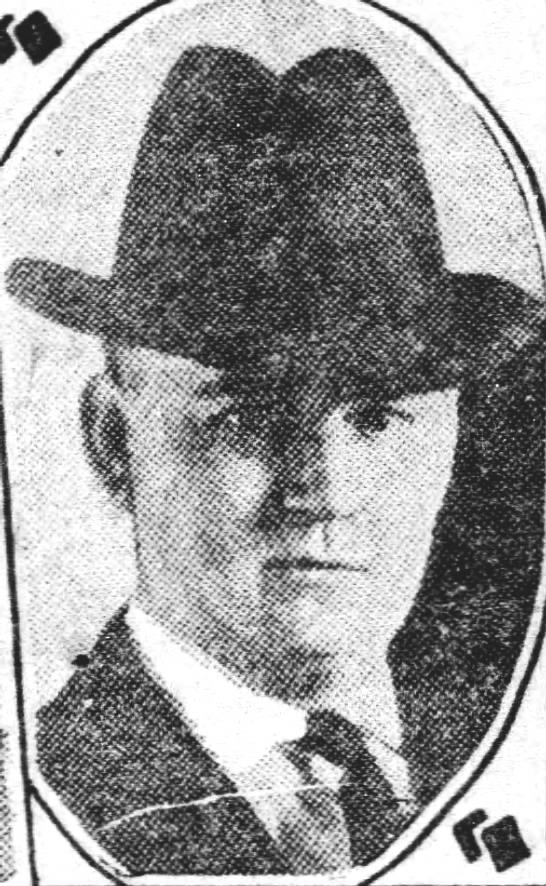
Wellington Patrick, 1925
Wellington Patrick served as the first director for the Extension Department.  Patrick, a Magoffin County native received a teaching certificate in 1908 after completing the normal school course at UK.  He subsequently served as principal of several schools in Oklahoma before earning B.A. and M.A. degrees from George Washington University and a doctorate from Peabody College.  He served as secretary to UK President Frank McVey before serving as Director of Extension from 1919 until 1934, He joined the faculty of the new College of Education where he taught until his death in 1944.

 UK ONLINE, 2019


Today, UK is making a renewed effort to offer higher education opportunities to Kentuckians beyond the Lexington campus.  Using very similar language and offering nearly the same number of subjects from a century earlier, "UK Online informs prospective students to take advantage of 30 plus degrees and certificates and "experience the same high-quality education as our resident students" and "draw on the resources of a flagship university that includes undergraduate, professional, medical, and agricultural colleges."  

Recently, UK Provost David Blackwell noted that, "Our vision for UK Online is one that leverages the creative, collaborative potential of technology to connect our outstanding faculty to students throughout Kentucky and beyond" adding that, "And we are committed to doing that the right way."


Thursday, June 6, 2019

UK Soldiers Remembered

Following the Normandy invasion, the 1944 Kentucky Alumnus Magazine reported on the experiences of two former UK students.

 Lieutenant James Lee Garrison, a former UK student from Lexington, landed with the American forces in France.  He was shot in the right side of his chest six days after going ashore and evacuated to England for hospitalization.

Lieutenant Warner Broughman, 1940 UK graduate, was a member of the Army's 101st Airborne Division. His unit of paratroopers were the first to parachute into France during the invasion of France.  He fought for six days behind enemy lines before being wounded and he, too, was eventually evacuated to England.

R.O.T.C. Unite, 1940
Cadet Captain Broughman first row, far left
As reported in the Kentucky Alumnus Magazine, "At the hospital in England Lieutenant Broughman was proud of his company and glad to tell its story, but had little to say about his part in the landing and the fight which followed.  'Our division accomplished its mission and my company did its stuff.  The mission was tough.'"


Monday, May 27, 2019

UK's World War Two Veterans

Anticipating a dramatic post-war World War Two enrollment increase, UK Dean of Women Sarah Bennett Holmes warned in 1946 that as the university worked to provide for the returning men veterans it must also assure that women students are not overlooked.  Dean Holmes had been very involved in numerous activities on the home front in support of the war effort and, like all UK administrators, wanted to do everything possible to support the education of returning veterans.  But she was also determined to make sure that women students, some of whom were veterans themselves, had equal access to UK during this disruptive moment in higher education.

Writing to President Herman Donovan she argued that, "I cannot help but wonder if the doors are closing for women students at our co-educational institutions.  It is a short-sighted policy to provide educational benefits for veterans at the expense of women.  More women than ever are applying for entrance to institutions of higher learning.  Some people are saying let women wait their turn.  There is no turn in higher education for women.  The veterans' pressure will be felt perhaps five or ten years.  Women cannot wait until this pressure is reduced."

An influx of returning veterans did begin to enroll at UK following the war.  During the first term of the 1947 summer quarter enrollment reached 3,897.  A total of 2,591 veterans (2,541 men and 50 women) enrolled that summer comprising 67% of the student body.  Forty-two percent of the veterans, (1,091) were married and 403 of them had a total of 500 children.

To begin to meet the married students' housing needs the university opened Cooperstown alongside Woodland Avenue.  The 334 prefabricated Cooperstown homes were funded by the federal government.


Cooperstown
UK also bought temporary military barracks and placed them on campus to house both women and men students and to provide space for an additional dining hall.  

Women's temporary housing on the present site of
Holmes Hall at the Avenue of Champions and Limestone.

UK supported the returning veterans from World War Two and continues to support veterans today to help them complete their educations and become successful in their chosen fields..

Monday, May 20, 2019

UK Desegregation, 1949

Seventy years ago today (May 20) the Kentucky Kernel reported that, "University to Accept Negroes in Four Colleges."  This followed the ruling in the Lyman Johnson case weeks earlier in which Judge H. Church Ford "declared that Negroes must be admitted to the graduate and professional schools of the University until the state could provide separate schools of equal or substantially equal educational opportunities."

UK President Herman Lee Donovan said that "two other Negroes, in addition to Johnson, have applied for entry at the University in the summer term, which begins June 20."

For the full story go to the Kentucky Kernel, May 20, 1949.  https://exploreuk.uky.edu